
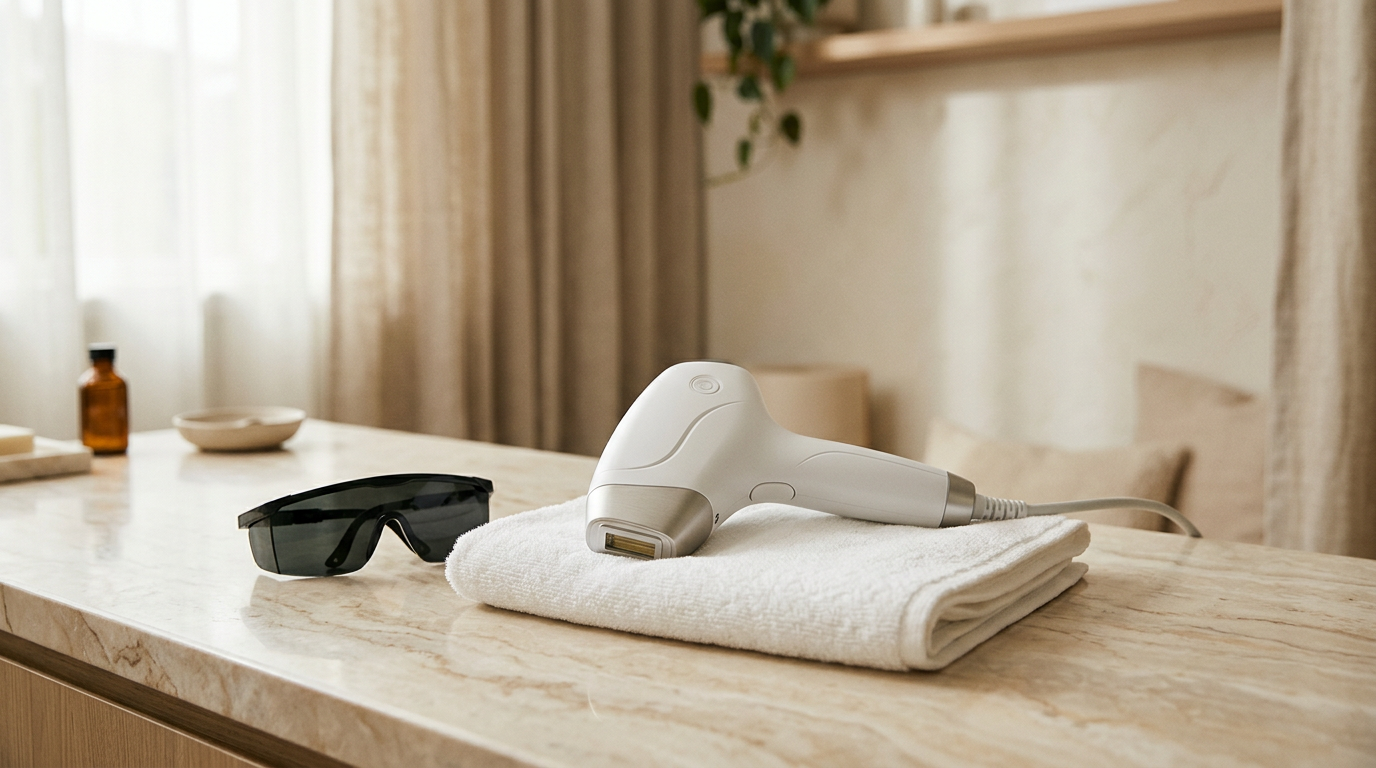
Laser hair removal: procedure, result and limits
Why several sessions are needed, which hair types respond – and what permanent hair reduction realistically means.
Laser hair removal is one of the most common aesthetic treatments. It works well – when the conditions are right.
How it works
The laser beam is absorbed by the pigment (melanin) in the hair and converted into heat. This heat damages the hair root while the surrounding skin is spared.
Why several sessions are needed
Hair grows in cycles, and only hairs in the active growth phase can be reached. At any given time only some of the hairs are in this phase. That is why six to ten sessions four to eight weeks apart are usually needed.
Which hairs respond
The treatment works best on dark hair on lighter skin – the contrast is decisive. Very light, grey or red hair contains too little pigment and can barely be treated. We say this honestly in advance, rather than selling sessions that cannot work.
Procedure
After a preliminary examination of skin and hair type, the area is shaved, you receive eye protection, and the laser is guided over the skin. The underarms take only a few minutes; larger areas correspondingly longer.
Afterwards
Slight redness around the hair follicles is normal and subsides quickly. For a few days: no tanning bed, no sauna, no intense sunbathing, plus sun protection.
What „permanent“ means
The technically correct term is permanent hair reduction: hair growth is significantly and lastingly reduced. Individual hairs can return after years, often finer and lighter. A top-up is then usually enough.